

How to force the batsman into a mistake against inswing
Picture the scene. You are in the field after posting a big score. The opposition look in little danger of being bowled out on a good batting track.
You need wickets to prevent the draw but all the usual ploys are failing.
It's time to get creative; It's time to force the batsman into an error.
The tactic of making a batsman play in unusual ways can be overlooked but is very effective in the right circumstances. Batting is about concentration, especially when the draw is favourite.
If you can break concentration you can create chances for wickets.
As you probably already realise, there are as many ways to do this as Sachin has runs. But to show you what I mean, it's important to use a real life example. So let's return to the first Ashes Test of 2009.
England were battling to save the game with Collingwood and Flintoff at the crease looking comfortable. The bowler, Hilfenhaus, was getting some inswing so captain Ponting changed the field to this:
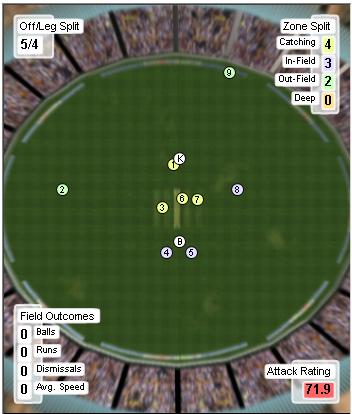
As the pitch was slow and edges were hardly carrying the traditional slips were down to just one and the catchers were all in front of the wicket:
- Short extra cover
- Short midwicket
- Very close mid on (more level with the non-strikers stumps than in the picture).
These were in place to catch the mistimed drive; more likely on a slow wicket with the ball not coming onto the bat well. There was one extra catcher on the leg side as the ball was swinging in.
It is in the outfield that the trap was set.
- Mid on and mid off were very straight, cutting off the full face of the bat drive.
- Square leg and fine leg are in place to save the ball that is too straight and swinging onto the legs.
There was no one in the traditional covers, with cover point set deep meaning there is a big gap between straight mid off and slip as shown here:
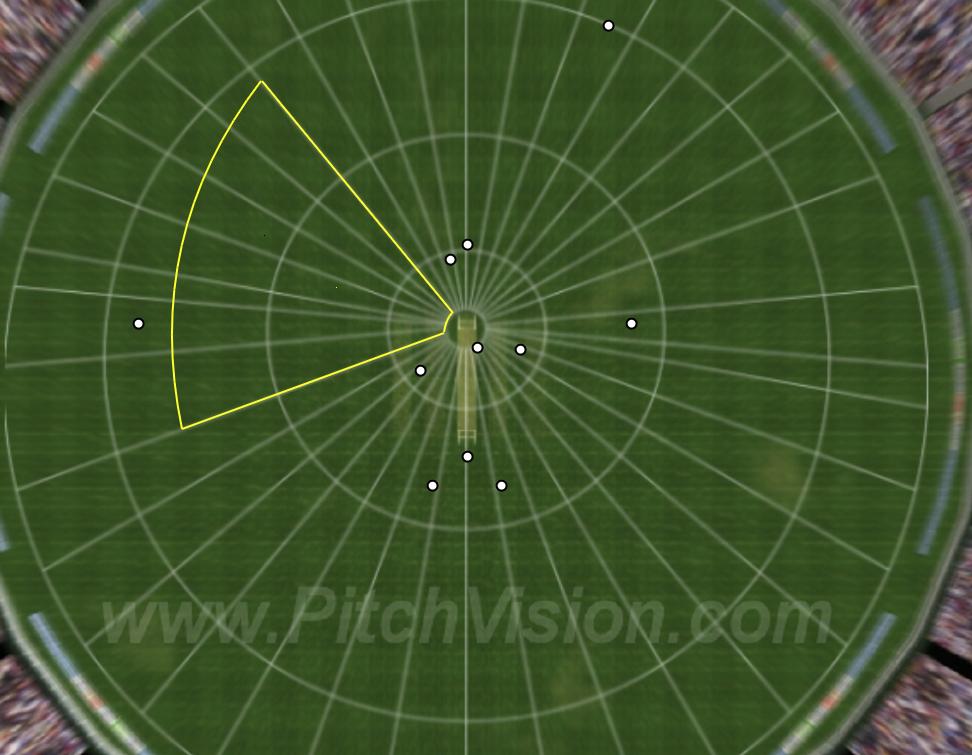
The tricky part about this gap was the need to drive square to hit it. This is a risk against any bowling as you are not showing the full face to the ball so are more likely to edge it.
On top of that, the bowler was bowling full, straight and inswinging balls. This brings bowled and LBW as a risk, especially when looking to play square.
The ploy is an example of one way you can try and tempt the batsman into an error by setting a field and bowling to a plan.
Do you have any other examples? Leave a comment.

Want to be a better captain? Learn from the best with the interactive online course Cricket Captaincy by Mike Brearley.
- Login to post comments

Comments
Wooho!,
I was making a in-swing field my self, surprisingly i also had a trapping field but not this one , another trap!
Why is there no deep mid wicket or midwicket, incase the bowl in swings and the batsmen just has to flick it off the pads or just use his wrist to play to the huge gap for four?
That is an excellent variation (this is just a template to work from, not gospel). You can drop square leg back to the rope if you like. Remember this field is when you are going all out to bowl the opposition out and have no real concern for the runs they get. Great point though.
What was the field you had out of interest vishi?